Which is Better Value? Asus Rog Cetra Open vs Razer Kitsune Compared
The landscape of specialized gaming peripherals has expanded far beyond the traditional confines of mechanical keyboards and ultra-lightweight mice. For enthusiasts today, the pursuit of performance often leads to niche hardware designed to solve specific problems or enhance particular genres of play. Two of the most talked-about entries in this category are the Asus ROG Cetra Open and the Razer Kitsune. At first glance, these two products appear to have nothing in common. One is a set of open-ear gaming earbuds designed for situational awareness and comfort; the other is an all-button optical arcade controller designed for precise execution in fighting games.
However, for the modern gamer who is looking to invest a significant portion of their budget into a high-tier accessory, the question often boils down to "value." Value is not merely the price on a sticker; it is the intersection of utility, longevity, build quality, and how effectively a device solves a pain point in the user’s workflow or playstyle. This article explores these two premium peripherals from the perspective of a buyer trying to decide which investment offers the most transformative impact on their gaming experience.
The Asus ROG Cetra Open: A New Paradigm for Audio Comfort
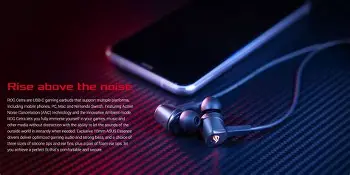
The Asus ROG Cetra Open represents a significant pivot in gaming audio. Most gaming headsets follow a traditional path: closed-back designs that prioritize passive noise isolation or open-back over-ear designs that prioritize soundstage. The ROG Cetra Open takes a different route by utilizing an open-ear design that sits just outside the ear canal. This approach is primarily aimed at gamers who find traditional earbuds intrusive or over-ear headsets too heavy and heat-inducing during long sessions.
Design and Build Philosophy
The build quality of the ROG Cetra Open is quintessential Republic of Gamers. It features a rugged yet lightweight construction with the signature aggressive aesthetic often associated with the brand. The use of premium plastics and silicone ear hooks ensures that the device remains secure during movement without causing the fatigue often associated with "in-ear" pressure. Unlike traditional earbuds that rely on a seal within the ear canal to produce bass, the ROG Cetra Open uses directional audio technology to beam sound into the ear while allowing ambient noise to remain audible.
Sound Performance and Spatial Awareness
In a gaming context, the ROG Cetra Open excels in scenarios where spatial awareness is tied to the physical environment. For a parent who needs to hear a child in the next room, or a streamer who wants to hear their own natural voice without the "echo" effect of closed-back headphones, the value proposition is immediate. The sound profile is surprisingly robust for an open design. Asus has utilized large drivers that manage to provide a respectable amount of punch in the mid-range and clear highs, which are essential for identifying footsteps or weapon reloads in tactical shooters.
However, it is important to note the inherent limitations. Because there is no seal, the sub-bass extension is naturally weaker than that of the ROG Cetra True Wireless or other in-ear competitors. The tradeoff is a massive soundstage. The audio feels "outside the head," similar to listening to a pair of high-end desktop speakers, which can actually help with long-term ear health and reduce the risk of listener fatigue.
Pros and Cons of the Asus ROG Cetra Open
- Pros:
- Exceptional comfort for long gaming sessions; no ear canal pressure.
- Maintains full environmental awareness, perfect for home settings where interruptions are common.
- Directional audio technology minimizes sound leakage more effectively than standard open-ear buds.
- Lightweight and portable, making it a viable option for handheld gaming on the go.
- Signature ROG aesthetic with high-quality materials and durable tactile buttons.
- Cons:
- Bass response lacks the "thump" required for cinematic immersion.
- Not suitable for noisy environments like cafes or airplanes due to lack of isolation.
- Higher price point compared to traditional wired earbuds with similar audio fidelity.
The Razer Kitsune: Precision Engineering for the FGC
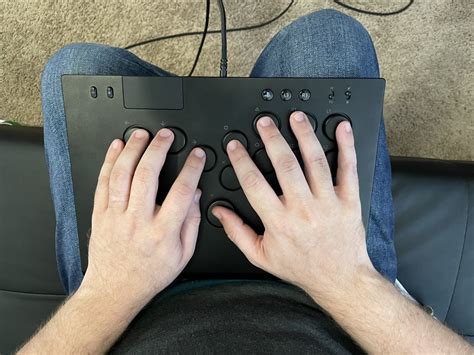
On the opposite end of the peripheral spectrum lies the Razer Kitsune. This is an all-button optical arcade controller, often referred to in the Fighting Game Community (FGC) as a "leverless" controller. By removing the traditional joystick and replacing it with four precision buttons for movement, Razer aims to eliminate the travel time and input errors associated with a physical stick. This is not a general-purpose tool; it is a surgical instrument for games like Street Fighter, Tekken, and Mortal Kombat.
The Leverless Revolution
The primary value of the Kitsune lies in its execution precision. In fighting games, being able to hit "Down" then "Forward" instantly without the physical movement of a joystick can be the difference between winning a tournament and losing a set. Razer has outfitted the Kitsune with their low-profile linear optical switches. These switches have a shorter actuation point and use light-based triggers, ensuring that inputs are registered at the speed of thought. For a competitive player, this level of reliability is the ultimate value metric.
Shop the latest Electronics picks on Amazon.
Shop Amazon →Form Factor and Portability
Historically, arcade sticks have been bulky, heavy boxes that are difficult to transport. The Razer Kitsune breaks this mold with a slim, "laptop-style" form factor. It is thin enough to slide into a standard backpack, yet heavy enough to feel stable on a lap thanks to its aluminum top plate and full-surface rubber padding on the bottom. The inclusion of a cable lock ensures that the USB-C connection never drops during a heated match—a detail that professional players care about deeply.
Pros and Cons of the Razer Kitsune
- Pros:
- Optical switches provide near-instantaneous input registration and extreme durability.
- Slim, portable design is a massive upgrade over traditional, bulky arcade sticks.
- Officially licensed for PlayStation 5, ensuring seamless compatibility and tournament legality.
- Removable aluminum top plate allows for easy aesthetic customization.
- Eliminates "input bleed" common with joysticks, leading to cleaner execution of complex combos.
- Cons:
- Steep learning curve for players coming from a traditional joystick or gamepad.
- Expensive investment for a controller that only works with a specific genre of games.
- Lack of a touchpad or traditional analog sticks makes navigation in non-fighting games impossible.
Head-to-Head Comparison: Assessing the Specs
While these products serve different functions, comparing their technical approach to "premium" status helps clarify where your money is going. The following table highlights the core philosophies behind both devices.
| Feature | Asus ROG Cetra Open | Razer Kitsune |
|---|---|---|
| Primary Category | Audio / Wearable | Controller / Input Device |
| Core Technology | Directional Open-Ear Drivers | Low-Profile Linear Optical Switches |
| Platform Focus | Multi-platform (PC, Mobile, Handheld) | PS5 and PC |
| Portability | High (Pocket-sized case) | Medium-High (Backpack-friendly) |
| Niche Addressed | Audio comfort and awareness | Competitive fighting game precision |
| Build Material | Premium Plastic and Silicone | Aluminum Top Plate |
| Connectivity | Bluetooth / Wireless | Wired (USB-C with Cable Lock) |
Buying Guide: Which Investment Makes Sense for You?
Choosing between two high-end electronics like these requires an honest assessment of your gaming habits. Because they occupy such different spaces, the "better value" is entirely dependent on what part of your gaming setup is currently the weakest link.
Choose the Asus ROG Cetra Open If...
The ROG Cetra Open is the right choice for the "lifestyle" gamer. If you find yourself playing games for four or five hours at a time and frequently have to pull one ear cup off your headset to hear your family, the Cetra Open solves a daily frustration. It is also an excellent choice for gamers who use multiple devices. Because it relies on wireless connectivity, it can transition seamlessly from a PC sessions to a Nintendo Switch or a smartphone during a commute. The value here is in versatility and comfort. It isn't just a gaming tool; it’s a high-quality pair of everyday earbuds that happens to have the low-latency performance required for gaming.
Choose the Razer Kitsune If...
The Razer Kitsune is a "specialist" tool. You should only consider this if fighting games represent a significant portion of your hobby. If you are serious about climbing the ranks in ranked play or attending local tournaments, the Kitsune offers a tangible competitive advantage. Unlike the audio quality of the Cetra Open—which is excellent but subjective—the mechanical advantage of the Kitsune’s optical switches is measurable. The value here is in performance and peak execution. It is an investment in your skill ceiling.
The Factor of Longevity
When discussing value, we must mention durability. The Razer Kitsune, with its lack of moving mechanical parts (no joystick to wear out) and optical switches rated for millions of presses, is likely to last an entire console generation or longer. The Asus ROG Cetra Open, being a wireless device, is ultimately limited by the lifespan of its lithium-ion batteries. While the build is sturdy, any wireless audio device has a "shelf life" that a wired controller does not. However, the Cetra will likely see more hours of use per week because it can be used for music, podcasts, and calls in addition to gaming.
Real-World Use Cases
To truly understand the value, consider these two scenarios:
Looking for the best Electronics deals on Amazon?
View Offers →The Streamer: A streamer playing a variety of games needs to interact with their chat and hear their own voice clearly to maintain a consistent energy level. They also frequently play non-competitive titles where "booming bass" isn't as important as clear dialogue. For this user, the Asus ROG Cetra Open is incredibly high value. It removes the "closed-in" feeling and allows them to stay connected to their physical surroundings while providing high-quality game audio.
The Competitive Fighter: An aspiring pro-player is traveling to a major tournament. They need a controller that is reliable, legal under tournament rules, and won't fail due to a snapped joystick or a loose cable. The Razer Kitsune's slim profile allows them to carry it in a slim laptop bag, and the optical switches ensure that their "Critical Art" or "Super Move" comes out exactly when they frame-perfectly input the command. For this user, the Kitsune is the gold standard of value.
Conclusion
Determining which of these two premium products offers "better value" is a study in contrasting priorities. The Asus ROG Cetra Open offers a broad, lifestyle-oriented value. It addresses the physical well-being of the gamer, focusing on ear health, temperature regulation, and social connectivity. Its value is felt every minute you wear it through the absence of discomfort. It is a generalist's dream, providing a unique audio solution that works across almost every device you own.
Conversely, the Razer Kitsune offers a deep, specialized value. It is not trying to be everything to everyone; it is trying to be the best possible interface for a single, demanding genre. Its value is felt in the moments of high tension, where a dropped input means a loss. It is a specialist’s tool, built with materials and technology that justify its premium price through pure performance gains.
Ultimately, if you are looking for a peripheral that improves your overall quality of life during gaming, the Asus ROG Cetra Open is the superior value. If you are looking for a peripheral that improves your specific results and competitive standing in fighting games, the Razer Kitsune is an investment that will pay dividends for years to come. Both products represent the pinnacle of their respective niches, proving that in the world of high-end electronics, the "best" device is the one that most perfectly aligns with your personal goals as a player.