Don't Buy the Adizero Adios Pro Evo 2 Until You Read This Full Analysis
The intersection of materials science and product engineering has reached an unprecedented peak with the unveiling of the Adizero Adios Pro Evo 2. Within the consumer electronics and wearable technology spheres, "disruption" is a word frequently thrown around, yet few products legitimately shift the paradigm of what a physical object is capable of achieving. This device represents more than just a refinement of its predecessor; it is an ultra-specialized tool engineered for the singular purpose of human performance optimization. However, before investing in this high-tier specimen of engineering, it is vital to understand that it does not follow the traditional rules of consumer durability or versatility.
In this comprehensive analysis, we will deconstruct the sophisticated architecture of the Evo 2, examining the lab-grown polymers, the mechanical energy return systems, and the data-driven design language that defines it. For the buyer who prioritizes cutting-edge innovation, the Evo 2 is a marvel. For the pragmatist, it may be a cautionary tale. To understand whether this product belongs in your collection, one must look past the sleek silhouette and into the brutal performance metrics that dictate its existence.
The Engineering Philosophy: Minimalism and Maximalism
The design philosophy behind the Adizero Adios Pro Evo 2 is a fascinating study in contradictions. On one hand, the product team has pursued an aggressive path of minimalism, stripping away every non-essential gram of mass to achieve a weight profile that feels almost impossible for its dimensions. On the other hand, the internal components represent a maximalist approach to energy management. The core of the device is centered around a proprietary non-compression molded foam, a material so advanced that its production cycle is significantly more complex than standard industrial polymers.
Most consumer products are designed with a "safety factor"—extra material added to ensure the product can withstand improper use or environmental stressors. The Evo 2 discards this safety net. It is a "just-in-time" engineering masterpiece, where every structural element is tuned to function at the edge of its physical limits. This makes it a highly sensitive piece of equipment. It is not meant for daily utility or casual environments; it is a precision instrument designed for "peak state" operations.
Detailed Technical Analysis and Performance Review
When analyzing the Adizero Adios Pro Evo 2, we must categorize its performance into three pillars: Energy Conservation, Structural Integrity, and Bio-Mechanical Synchronization. Each of these pillars has been refined to provide the user with a competitive edge that is measurable in a laboratory setting.
1. Energy Conservation and the Core Engine
The primary innovation of the Evo 2 is its specialized midsole foam. Unlike traditional materials that lose a significant percentage of energy through heat during deformation, this bio-based polymer acts as a high-efficiency spring. When force is applied, the cellular structure collapses and rebounds with a speed that matches the human physiological cadence. This is the "engine" of the device. In real-world use cases, this results in a reduced metabolic cost for the user. Essentially, the device allows the human engine to run at a lower intensity while maintaining a higher output of speed and force.
2. Structural Integrity and Weight Optimization
The upper casing of the Evo 2 is a translucent textile that serves as more of a containment field than a protective shell. It is engineered to keep the internal energy systems aligned with the user’s foot without adding the weight of traditional overlays or reinforcements. This leads to a weight profile that is roughly 40% lighter than many other high-performance competitors in the market. However, this weight reduction comes at the cost of lateral stability. The device is optimized for linear movement; if the user's path involves sharp turns or irregular surfaces, the minimalism of the upper becomes a liability rather than an asset.
3. The EnergyRods 2.0 System
Embedded within the foam are carbon-infused rods that mimic the metatarsal structure of the human foot. While some competitors use a single rigid plate, the Evo 2 uses these distinct rods to allow for a more natural transition of force. This localized stiffness ensures that energy isn't wasted through the flexing of the midfoot, directing all power toward the final push-off. This mechanical advantage is what makes the Evo 2 feel "fast"—it subtly shifts the user’s center of gravity forward, encouraging a more aggressive and efficient gait.
Real-World Use Cases: Who Is This For?
Understanding the "why" behind the Adizero Adios Pro Evo 2 is just as important as the "what." This product is not a general-purpose electronic or wearable. It is a niche tool. Buyers typically fall into three categories:
Shop the latest Electronics picks on Amazon.
Shop Amazon →- The Performance Elite: Individuals who have reached a plateau in their physical training and require a technological boost to achieve a "Personal Best." For these users, the high cost and low durability are acceptable trade-offs for a 1-2% gain in efficiency.
- Technology Enthusiasts: Collectors and early adopters who view the Evo 2 as a piece of industrial art. These buyers care about the manufacturing process—the way the foam was formulated, the weight specs, and the scarcity of the product.
- Event-Specific Users: Individuals who save the device for a single, high-stakes day. Much like a specialized racing fuel, the Evo 2 is consumed by the effort it helps produce.
Pros and Cons Analysis
To provide a clear picture of the Adizero Adios Pro Evo 2, we have distilled its features and failings into a concise list of advantages and disadvantages. These reflect the realities of high-intensity hardware.
- Pro: Industry-Leading Energy Return. The energy-responsive foam is arguably the most efficient material currently available in consumer hardware, providing a "bounce" that must be felt to be understood.
- Pro: Minimalist Mass. At its current weight, the device effectively disappears on the user's body, reducing the rotational inertia and making high speeds feel effortless.
- Pro: Bio-Mechanical Geometry. The rockered shape of the sole unit is perfectly tuned for high-velocity forward momentum, correcting minor inefficiencies in the user's form.
- Pro: Advanced Breathability. The ultra-thin upper offers thermal regulation that prevents overheating during sustained high-output sessions.
- Con: Extreme Fragility. The materials used are so thin and the foam so specialized that the product has a very short lifespan—often cited as being optimal for only a single marathon-length event.
- Con: High Barrier to Entry. The price-to-utility ratio is skewed; you are paying a premium for a product that is designed to fail after a limited number of uses.
- Con: Minimal Surface Versatility. The outsole lacks any significant tread, meaning performance drops off sharply on wet or dusty surfaces.
- Con: Lack of Comfort for Casual Use. The aggressive geometry makes standing still or walking slowly uncomfortable, as the device is constantly "pushing" the user forward.
Technical Comparison: Evo 2 vs. Industry Standard
To illustrate where the Evo 2 sits in the current landscape of performance wearables, the following table compares it to a standard high-end performance model (the Adizero Adios Pro 3) to show the radical shift in design.
| Feature | Adizero Adios Pro 3 (Standard) | Adizero Adios Pro Evo 2 (Specialized) |
|---|---|---|
| Weight (Approx.) | 215 grams | 138 grams |
| Foam Type | Lightstrike Pro (Compression) | Lightstrike Pro (Non-Compression Molded) |
| Outsole Thickness | 3mm-5mm Rubber | Liquid-injected film (sub-1mm) |
| Expected Lifespan | 300 - 500 miles | 30 - 50 miles |
| Intended Use | Daily training and racing | Single-day competitive performance |
| Upper Material | Celermesh 2.0 (Reinforced) | Ultra-light Translucent Textile |
Comprehensive Buying Guide: Should You Invest?
Buying the Adizero Adios Pro Evo 2 is not like buying a standard pair of shoes or a typical wearable device. It is more akin to purchasing a high-performance racing tire: once you use it, you begin a countdown until it is no longer functional. Use the following criteria to determine if this investment aligns with your needs.
Define Your Objective
If your goal is to have a reliable trainer that lasts for six months, the Evo 2 is a poor choice. However, if you are looking to break a specific time barrier or compete at the highest level of your age group, the technology in this device provides a legitimate advantage. You must ask yourself: Is a 2-minute improvement worth the cost of a device that may only last one day?
Consider Your Environment
The Evo 2 is designed for the road, specifically flat, well-maintained asphalt. It does not have the stabilization required for trails, and the liquid-injected outsole film will shredded quickly if used on rough concrete or gravel. It is a "clean environment" product. If your training routes are unpredictable, you will likely destroy the product before you can realize its benefits.
Assess Your Bio-Mechanics
Because the Evo 2 is so light and lacks structural support, it requires the user to have a stable, well-developed gait. If you suffer from overpronation or have weak ankles, the minimalist upper will not protect you. This device is designed for a "neutral" user who can provide their own stability while the shoe provides the energy return.
Budgeting for Depreciation
In the world of electronics, we are used to things like smartphones losing value over two years. The Evo 2 loses its primary value in two hours. You must view the purchase as an "experience cost" rather than an "asset purchase." If the price of the unit represents a significant portion of your discretionary income, the stress of its fragility might outweigh the joy of its performance.
The Evolution of the Super Shoe
The Adizero Adios Pro Evo 2 marks a turning point in how we view consumer goods. It moves us away from the era of "durability" and into the era of "disposable peak performance." This is a trend seen in carbon-fiber cycling components and high-end automotive parts, but its arrival in footwear is a relatively new phenomenon. By utilizing advanced manufacturing techniques like non-compression molding, the engineers have bypassed the limitations of mass production to create something that feels like a prototype made available to the public.
Shop the latest Electronics picks on Amazon.
See Deals →This "prototype for the masses" approach is what makes the Evo 2 so polarizing. It challenges the standard consumer expectation that more money should buy more longevity. In this case, more money buys less mass and more speed, which are the only metrics that matter to the elite athlete. When you strip away the marketing, what remains is a skeletal frame of carbon and air, designed to shave seconds off the clock.
Analysis of the User Experience
Using the Evo 2 is a surreal experience for anyone accustomed to standard athletic footwear. The first thing one notice is the sound—or lack thereof. Because the foam is so air-rich and the outsole so thin, the impact with the ground is muted, yet the resulting forward projection is violent. There is a "tipping point" in the geometry. As the user transitions from the midfoot to the forefoot, the EnergyRods engage, and the shoe almost forces the foot through the gait cycle. It feels less like you are wearing a shoe and more like you have been integrated into a mechanical system.
However, this "system" requires constant engagement. You cannot be "lazy" in the Evo 2. If your form breaks down and you begin to heel-strike or lose core tension, the shoe becomes unstable. The high stack height of the foam, combined with the lack of a traditional heel counter, means that the user’s muscular system must work harder to maintain balance even as the foam makes the act of moving forward easier. It is a trade-off: mechanical efficiency in exchange for increased stabilizers usage.
A Masterclass in Material Science
The technical achievement of the Adizero Adios Pro Evo 2 cannot be overstated. The midsole foam is chemically tailored to maintain its resilience in a narrow temperature range, ensuring that whether the environment is cool or warm, the expansion rate of the cells remains consistent. This level of precision is typically reserved for aerospace components. The fact that this is wearable on a human foot is a testament to how far industrial design has come.
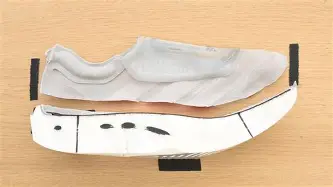
Furthermore, the reduction of the outsole to a simple film is a bold move. Most manufacturers use heavy rubber to provide grip and protect the midsole. By eliminating this, the engineers have moved the center of mass even closer to the foot. This enhances the "proprioception"—the user's ability to feel the ground and adjust their power delivery accordingly. It is a dangerous design, but for the skilled user, it is an empowering one.
Conclusion
The Adizero Adios Pro Evo 2 is an extraordinary achievement in engineering, but it is a highly specialized tool that defies traditional consumer logic. It offers a glimpse into a future where technology is tailored for the "moment of impact" rather than the "test of time." For the athlete who has done the work, mastered their form, and is standing at the precipice of a breakthrough, this device is the ultimate partner. It provides an energy return and a weight reduction that are currently unmatched by any other product in its class.
However, for the vast majority of consumers, the Evo 2 is a reminder that "the best" isn't always "the best for you." Its extreme fragility, niche performance window, and lack of versatility make it a poor investment for anyone seeking a general-use product. Before you decide to purchase, you must be honest about your goals, your mechanics, and your willingness to pay for a product that is designed to be brilliant and brief. In the world of high-performance electronics and wearable tech, the Evo 2 is a supernova: it burns brighter than everything else, but only for a very short time.