Difference Between Q8C Q8 Qled 2017 and Switch 2 Explained
Introduction
The comparison between a premium 2017 television like the Samsung Q8 / Q8C QLED and a modern gaming platform such as the Switch 2 might at first seem mismatched: one is a display hardware platform released in the TV market, the other is a hybrid gaming console. Yet for many buyers the two are evaluated together because the television is the primary display for console gaming and media consumption. This article explains how the Q8/Q8C QLED (2017) and the Switch 2 differ in purpose, strengths, and real-world performance when paired. It highlights what matters to buyers — picture quality, latency, HDR performance, connectivity, and use-case fit — and provides practical guidance for shoppers who are deciding on a TV for a modern console or trying to understand whether older high-end TVs remain a good match for newer game systems.
Overview: What each product is designed for
Q8 / Q8C QLED (2017)
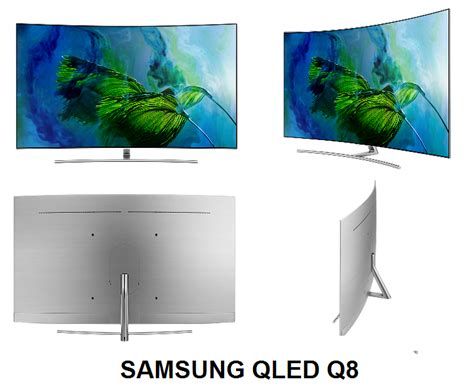
The Q8 and Q8C are Samsung’s early QLED flagships from 2017, positioned as premium 4K HDR televisions that introduced the brand’s quantum-dot based color enhancement to the mainstream. The Q8C denotes the curved variant; otherwise the two share the same core picture-processing, smart platform, and panel family. These TVs were engineered primarily as living-room displays for TV shows, movies, and general streaming, with strong emphasis on brightness and color volume for HDR material.
Switch 2 (hybrid gaming console)
The Switch 2 is the successor-generation hybrid gaming console that builds on the model of a handheld device that docks to a TV for living-room play. While details of each hardware revision change over time, the Switch 2's role is to deliver interactive entertainment with a mix of handheld portability and docked performance. Its priorities are low-latency input for gaming, a library of titles tuned to the hardware, and flexible use between portable and TV-based play.
Detailed product analysis
Picture technology and image quality
The Q8/Q8C QLED (2017) uses quantum dot enhancement to boost color saturation and perceived vibrancy compared with conventional LED-LCD displays of the time. That technology focuses on maintaining color accuracy at high brightness levels — a major advantage for HDR content where small color shifts can be visible. For viewers who prioritize bright rooms and vivid HDR scenes (sports, animated movies, nature documentaries), the Q8 series remains compelling.
The Switch 2 produces the content that the TV renders. Its video output quality depends on the console’s native rendering resolution in both handheld and docked modes and the video signal it sends over HDMI when connected to a TV. The console’s strength is in frame-rate and responsiveness for games; it typically outputs 720p–1080p in handheld mode and scales up in docked mode, with certain titles offering higher resolutions or enhanced modes. When paired with a capable TV, the console can look substantially better than on the built-in handheld screen because of higher pixel count and better upscaling by the TV.
HDR, color, and contrast handling
Samsung’s QLED lineup emphasized HDR reproduction through high peak luminance and wide color gamut. Even for a 2017 set, the Q8 family delivered a strong HDR experience for bright highlights and colorful scenes. However, local dimming performance and black-level control are generational: while the Q8 handled contrast well for its era, newer sets have improved algorithms, more granular dimming zones, and better processing for mixed bright/dark scenes.
The Switch 2’s HDR output (if supported by the console and games) relies on the TV to reproduce the dynamic range. For gamers, HDR can enhance visuals dramatically, but only when the display can sustain bright highlights and rich color without crushing shadow detail — exactly the areas where a Q8 can still shine despite its age.
Latency and responsiveness
Input lag is a decisive factor for competitive and fast-paced gaming. The Switch 2 prioritizes low system latency in game design, but the final display latency depends on the TV. The Q8 series, while offering a “Game Mode” to reduce processing and lower input lag, may not match the lowest-latency modern TVs that have been optimized for 4K@120Hz gaming and HDMI 2.1 features. For casual and single-player gaming, the Q8’s latency is acceptable; for competitive titles where every millisecond counts, buyers should verify measured input-lag figures or try the TV with the console before committing.
Discover deals on TVs & Home Theater — updated daily.
See Deals →Connectivity and future-proofing
The Q8/Q8C includes the typical port set for its time: multiple HDMI inputs, optical audio out, and Ethernet/wireless for smart features. However, it is a 2017 generation product and therefore does not include modern HDMI 2.1 features such as native 4K@120Hz, Variable Refresh Rate (VRR), or Auto Low Latency Mode (ALLM) as implemented in current devices. The Switch 2 may require modern HDMI features to unlock its highest performance modes; where the console supports higher frame rates or VRR, a newer TV with HDMI 2.1 will be a better match.
Smart platform and streaming
Samsung’s Tizen-based smart platform on the Q8 series remained one of the more mature and app-rich ecosystems in 2017, offering the major streaming services and a polished interface. For viewers who stream movies, shows, and sporting events, the Q8 still provides a good smart-TV experience, although app updates and new services may have changed over the years.
Switch 2’s streaming abilities are secondary to gaming; any streaming through the console is generally outmatched by a dedicated smart TV platform in terms of app availability and UX. Users who rely on the console for streaming will find the TV’s built-in apps more convenient for daily viewing.
Pros & Cons
Q8 / Q8C QLED (2017)
- Pros: High color volume and bright highlights suitable for HDR content; polished smart-TV platform with major streaming apps; premium build and picture tuning for movies and sports; curved variant (Q8C) adds immersive field-of-view for some viewers.
- Cons: Older generation processing and local-dimming compared with current TVs; lacks modern HDMI 2.1 features (4K@120Hz, VRR) that newer consoles leverage; possible software update limitations years after release; curved design not preferred in all rooms.
Switch 2
- Pros: Hybrid handheld/docked form factor enables flexible play; game library and first-party titles tuned to the hardware; emphasis on low-latency interactive performance; portable convenience for family and social gaming.
- Cons: Visual fidelity and frame-rate ceilings are constrained by the console’s hardware; best docked performance requires a modern TV to realize potential (HDR, higher refresh rates); handheld screen is small compared with living-room TVs for cinematic experiences.
Side-by-side comparison
| Feature | Q8 / Q8C QLED (2017) | Switch 2 |
|---|---|---|
| Category | Premium 4K QLED television | Hybrid gaming console (handheld + docked) |
| Primary purpose | TV viewing: movies, streaming, sports | Interactive gaming and portable play |
| Display tech | Quantum-dot enhanced LCD (QLED) with high brightness | Internal GPU output; uses connected display (TV) for big-screen play |
| HDR handling | Strong HDR highlights and color for its generation | Supports HDR output depending on system and game |
| Latency & gaming features | Game mode reduces input lag but lacks modern HDMI 2.1 features | Console designed for low-latency play; benefits from modern TV features |
| Smart features | Mature smart TV platform with major streaming apps | Primary focus is gaming; streaming available but secondary |
| Use-case fit | Cinematic viewing, bright-room HDR, streaming hub | Casual and portable gaming, family multiplayer, indie/first-party titles |
| Futureproofing | Good for video but lacks latest gaming-focused standards | Console evolves through software and game releases; display needs to be modern to unlock highest modes |
Real-world use cases and buyer concerns
When shoppers evaluate a TV like the Q8/Q8C against a console such as the Switch 2 they usually have concrete scenarios in mind:
- Family movie nights: For movie watchers who prioritize color and brightness, the Q8 provides vivid HDR scenes and a spacious display that enhances cinematic content. The console is complementary — it supplies movie apps or allows playback of certain content, but the TV is the primary device for picture delivery.
- Living-room gaming with friends: The Switch 2 excels at local multiplayer and pick-up-and-play sessions. The TV matters because it determines how crisp the image will be and whether input lag will hinder fast-action titles. In this case, pairing the Switch 2 with a TV that minimizes latency and reproduces colors accurately is essential.
- Competitive or fast-paced gaming: Players sensitive to input lag should check measured lag numbers. While the Q8’s Game Mode cuts processing overhead, modern TVs designed with gaming in mind may deliver lower lag and support VRR and higher refresh rates that reduce tear and stutter.
- Bright-room viewing: For sunlit rooms, the Q8’s brightness helps maintain visibility of HDR highlights. The console’s brightness output is irrelevant; the display's capability determines real-world visibility.
Buying guide: choosing the right TV for Switch 2 and general viewing
When buying a TV for a console like the Switch 2, or deciding whether an older high-end model such as the Q8/Q8C still makes sense, consider the following criteria.
1. Prioritize low input lag for gaming
Look for TVs with a verified low-latency "Game Mode." If possible, consult measured input-lag tests (ms) from reliable reviewers. For casual play, numbers under ~40 ms are usually fine; competitive players often target much lower.
2. HDR performance and peak brightness
Games and movies that support HDR look best on displays that can sustain bright highlights and preserve shadow detail. A TV with strong peak luminance and a wide color gamut will make HDR content pop. The Q8 excels in bright HDR highlights for its class, but newer models may offer improved dynamic-range handling.
3. HDMI version and features
Check HDMI capabilities. HDMI 2.1 features (4K@120Hz, VRR, ALLM) are highly relevant for modern consoles. If the Switch 2 supports any of these features, a TV with matching HDMI standards will be more futureproof. Older TVs, including 2017 models, may only have HDMI 2.0 and therefore cannot unlock the highest console modes.
Shop the latest TVs & Home Theater picks on Amazon.
Browse Now →4. Screen size and viewing distance
Match screen size to room layout. Larger screens increase immersion for both movies and split-screen multiplayer. Consider the viewing distance and whether the curved Q8C's field-of-view advantages suit the seating arrangement; curved screens can exaggerate reflections in certain lighting.
5. Smart features and app ecosystem
Smart TV ease-of-use matters for users who stream more than they game. Samsung’s platform has historically offered an intuitive interface and broad app selection, which keeps the Q8 relevant for daily streaming tasks.
6. Sound and external audio options
Built-in audio on TV sets is often modest. For games with directional audio cues or cinematic movie soundtracks, a soundbar or AV receiver will improve the experience. Confirm the TV’s audio output options (optical, ARC/eARC) to ensure compatibility with external systems.
7. Budget and resale considerations
Older high-end sets often depreciate in price but still deliver excellent picture value. If the Q8 is significantly discounted and its feature set meets the buyer’s needs, it can be a smart purchase. Conversely, buyers who want to leverage the Switch 2’s highest display modes may find better long-term value in a newer TV with up-to-date connectivity.
Practical pairing recommendations
For anyone who owns or plans to buy a Switch 2 and is considering a Q8/Q8C (2017), the following practical tips help get the most from the combination:
- Enable the TV’s Game Mode when playing to reduce input lag.
- Use a high-quality HDMI cable suitable for the console’s output; if the Switch 2 specifies higher bandwidth, ensure the cable and TV inputs support it.
- If HDR appears dim or crushed, adjust the TV’s HDR picture settings or try a console-specific brightness calibration within the game where available.
- Consider external audio for better multiplayer and cinematic experiences; use ARC/eARC if available for simplified connections.
- If buying new, weigh the price difference between a refurbished/discounted Q8 and a modern TV with HDMI 2.1 — the latter may offer more futureproofing for console improvements.
Conclusion
The Q8 / Q8C QLED (2017) and the Switch 2 serve different primary purposes but intersect in the living room as a display-and-content pair. The Samsung Q8 family remains a strong performer for bright-room HDR viewing and streaming, offering color and highlight performance that many buyers will appreciate. The Switch 2, by contrast, is focused on interactive entertainment, portability, and local multiplayer appeal. For the best experience, buyers should match their priorities: choose a TV that emphasizes low latency and modern HDMI features if gaming performance and futureproofing matter most; choose a TV like the Q8 if HDR brightness, color fidelity for movies, and a mature smart platform are the top priorities. Understanding those trade-offs helps buyers pick a combination that aligns with their viewing habits and gaming preferences without paying for capabilities they won't use.